Search engine optimization (SEO) is no longer just about keywords and backlinks. Modern SEO requires consistent content creation, search intent matching, technical optimization and continuous performance analysis. This is where AI content tools are transforming how marketers and businesses achieve better search rankings.
In this article, we’ll explore how AI content tools improve SEO results, streamline workflows and help content rank higher in search engines.
The Role of AI in Modern SEO
AI content tools use machine learning and natural language processing to analyze massive amounts of data from search queries and user behavior to competitor content and ranking factors. Instead of relying solely on manual research and guesswork, marketers can now create data driven, search optimized content faster and more accurately.
AI helps bridge the gap between what users search for and what search engines reward.
1. Smarter Keyword Research & Topic Discovery
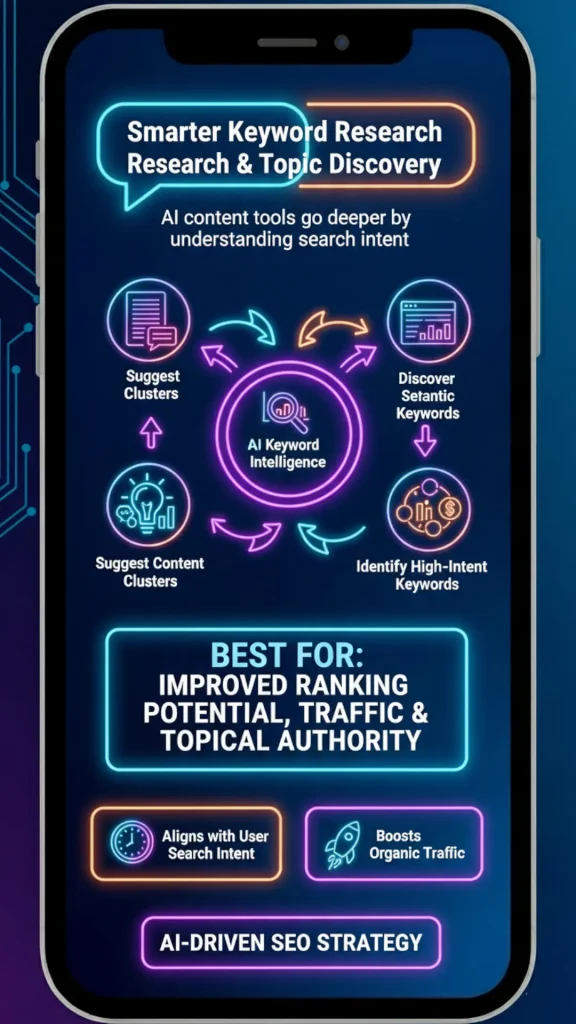
Traditional keyword research tools provide lists of keywords but AI content tools go deeper by understanding search intent.
AI can:
- Identify high intent keywords
- Discover related semantic keywords
- Suggest content clusters and topic ideas
- Analyze competitor keyword strategies
This helps create content that aligns with how users actually search improving ranking potential.
2. Search Intent Optimized Content Creation
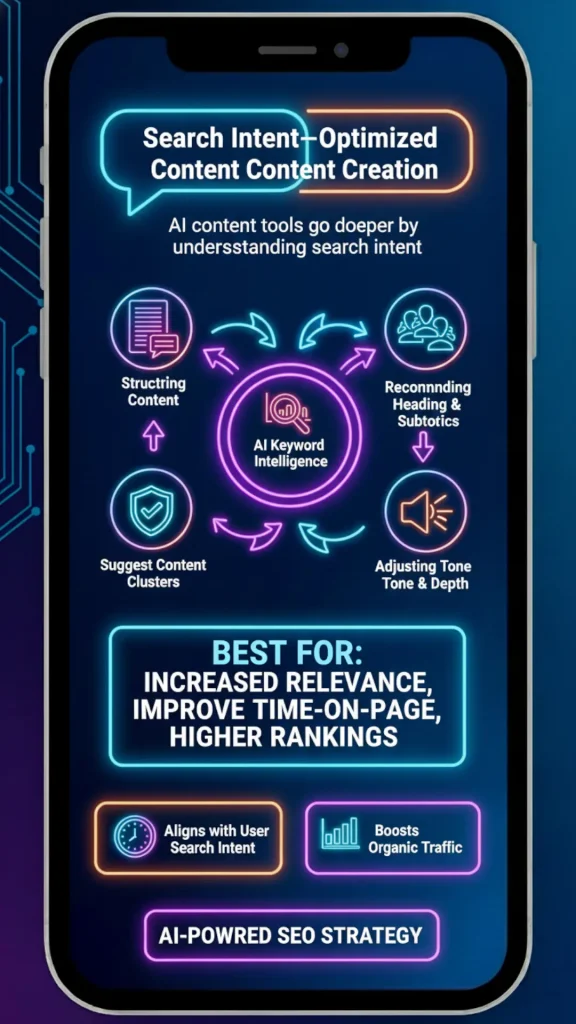
One of the biggest SEO challenges is matching content with user intent. AI content tools analyze top ranking pages to understand whether users want informational, commercial or transactional content.
AI helps by:
- Structuring content to match search intent
- Recommending headings and subtopics
- Adjusting tone and depth based on ranking patterns
- Ensuring comprehensive topic coverage
This increases relevance and improves time on page metrics.
3. Faster Content Production Without Quality Loss

Search engines reward fresh, consistent content. AI tools allow marketers to publish more frequently without sacrificing quality.
AI can:
- Generate blog drafts and outlines
- Expand short content into long form articles
- Rewrite content for clarity and SEO
- Repurpose content across platforms
This speed enables businesses to scale content production while maintaining optimization standards.
4. On Page SEO Optimization Made Easy

AI content tools automatically optimize on-page SEO elements that affect rankings.
These include:
- SEO friendly headlines and meta descriptions
- Proper keyword placement
- Internal linking suggestions
- Readability improvements
- Image alt text generation
By optimizing these elements automatically, AI reduces human error and improves overall page quality.
5. Content Readability & User Experience Improvements
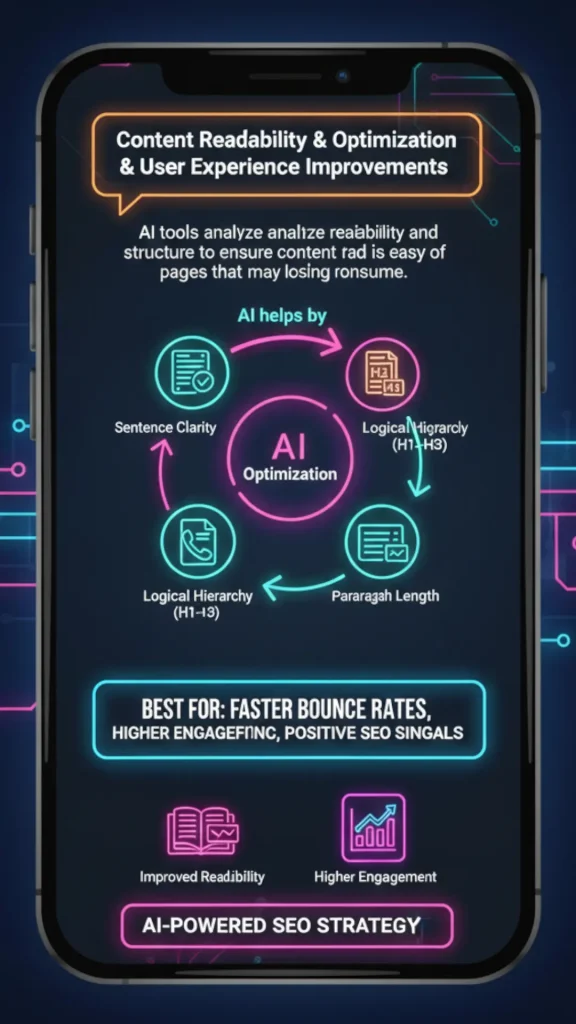
Search engines prioritize content that delivers a good user experience. AI tools analyze readability and structure to ensure content is easy to consume.
AI improves:
- Sentence clarity and flow
- Paragraph length and formatting
- Logical content hierarchy (H1–H3)
- Mobile friendly readability
Better readability leads to lower bounce rates and higher engagement both positive SEO signals.
6. Content Refresh & Optimization for Existing Pages
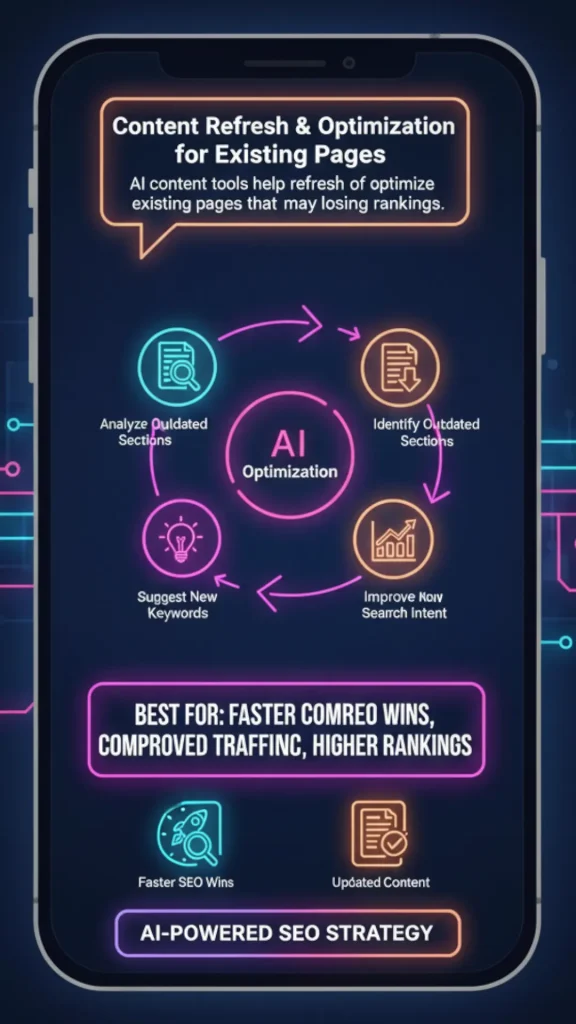
SEO isn’t only about new content. AI content tools help refresh and optimize existing pages that may be losing rankings.
AI can:
- Identify outdated sections
- Suggest new keywords and subtopics
- Improve content depth
- Optimize for updated search intent
Updating existing content often delivers faster SEO wins than creating new articles.
7. AI Driven Competitive Content Analysis
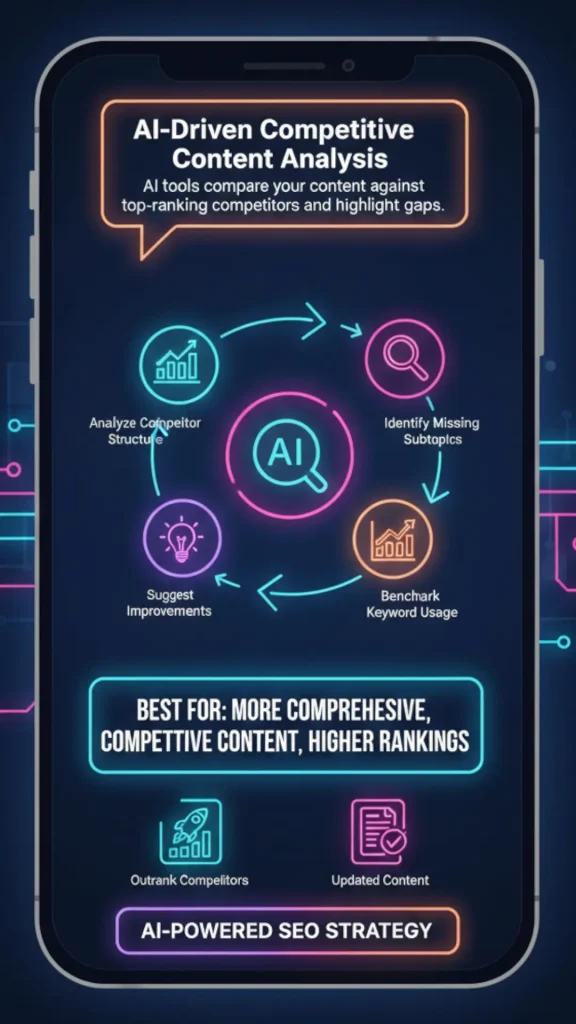
AI tools compare your content against top ranking competitors and highlight gaps.
They can:
- Analyze competitor structure and word count
- Identify missing subtopics
- Benchmark keyword usage
- Suggest improvements to outrank competitors
This allows you to create more comprehensive and competitive content.
8. Automated Content Optimization for Voice & AI Search

With the rise of voice search and AI driven search results, content needs to be more conversational and structured.
AI helps by:
- Optimizing content for question based queries
- Creating FAQ sections
- Improving conversational tone
- Structuring content for featured snippets
This increases visibility across traditional and AI powered search experiences.
Popular AI Content Tools Used for SEO
Many AI content tools combine writing, optimization and analysis features, such as:
- AI writing assistants
- SEO content optimization platforms
- AI keyword research tools
- Content audit and refresh tools
These tools integrate seamlessly into content workflows, making SEO more efficient and scalable.
Best Practices for Using AI Content Tools in SEO
To maximize SEO performance with AI:
- Combine AI insights with human expertise
- Focus on value, not just keywords
- Maintain brand voice consistency
- Validate facts and data
- Track performance and iterate continuously
AI works best when used as a strategic assistant, not a replacement for SEO fundamentals.
Final Thoughts
AI content tools are reshaping SEO by making content creation smarter, faster and more data driven. From keyword research and intent optimization to on page SEO and content updates, AI empowers marketers to achieve better rankings, higher engagement and sustainable growth.
By understanding how AI content tools improve SEO results, businesses can stay competitive in search engines and adapt to the future of digital marketing.