Understanding audience behavior is one of the most important and most challenging aspects of modern digital business. Users interact with brands across websites, apps, social media, emails and ads, generating massive amounts of data. Making sense of this data manually is nearly impossible.
This is where AI analytics tools play a critical role. They transform raw data into meaningful insights, helping businesses understand what audiences do, why they do it and how to respond effectively.
Why Audience Behavior Insights Matter
Knowing your audience goes beyond demographics. It’s about understanding behavior, intent, preferences and decision making patterns.
When businesses understand audience behavior, they can:
- Improve user experience
- Increase engagement and retention
- Optimize marketing campaigns
- Personalize content and offers
- Make data driven decisions
AI analytics tools make these insights faster, deeper and more accurate.
What Are AI Analytics Tools?
AI analytics tools use machine learning, predictive modeling, and pattern recognition to analyze large volumes of user data. Unlike traditional analytics, AI doesn’t just report what happened it explains why it happened and what is likely to happen next.
These tools continuously learn from new data, improving accuracy over time and adapting to changing audience behavior.
1. Identifying Behavior Patterns at Scale

AI analytics tools excel at detecting patterns humans might miss.
They can analyze:
- Click paths and navigation behavior
- Time spent on pages
- Content interaction patterns
- Drop off and conversion points
By identifying recurring patterns, AI helps businesses understand how users move through digital experiences and where friction occurs.
2. Segmenting Audiences Automatically
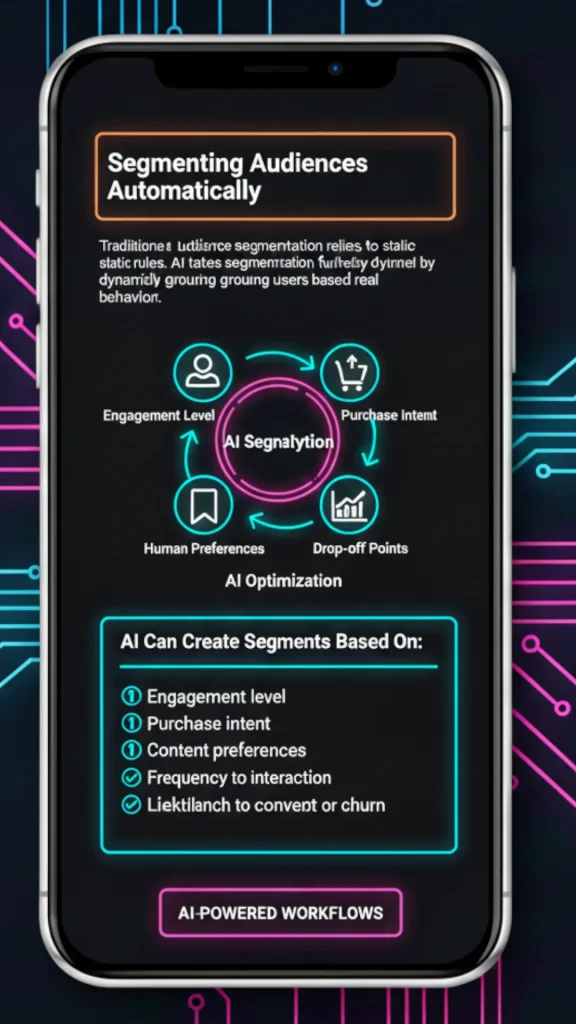
Traditional audience segmentation relies on static rules. AI takes segmentation further by dynamically grouping users based on real behavior.
AI can create segments based on:
- Engagement level
- Purchase intent
- Content preferences
- Frequency of interaction
- Likelihood to convert or churn
These segments update automatically, ensuring insights stay relevant as behavior changes.
3. Predicting Future Audience Actions

One of AI’s biggest advantages is predictive analytics. Instead of reacting to past behavior, businesses can anticipate what users will do next.
AI analytics tools can predict:
- Which users are likely to convert
- Who may disengage or churn
- Best time to send messages
- Content most likely to perform well
This allows teams to take proactive actions rather than reactive ones.
4. Personalizing User Experiences

AI driven insights enable deep personalization across channels.
With AI analytics, businesses can:
- Deliver personalized content recommendations
- Customize email campaigns
- Optimize landing pages for different segments
- Tailor offers based on behavior
Personalization powered by AI leads to higher engagement, better retention and increased customer satisfaction.
5. Understanding Cross Channel Behavior
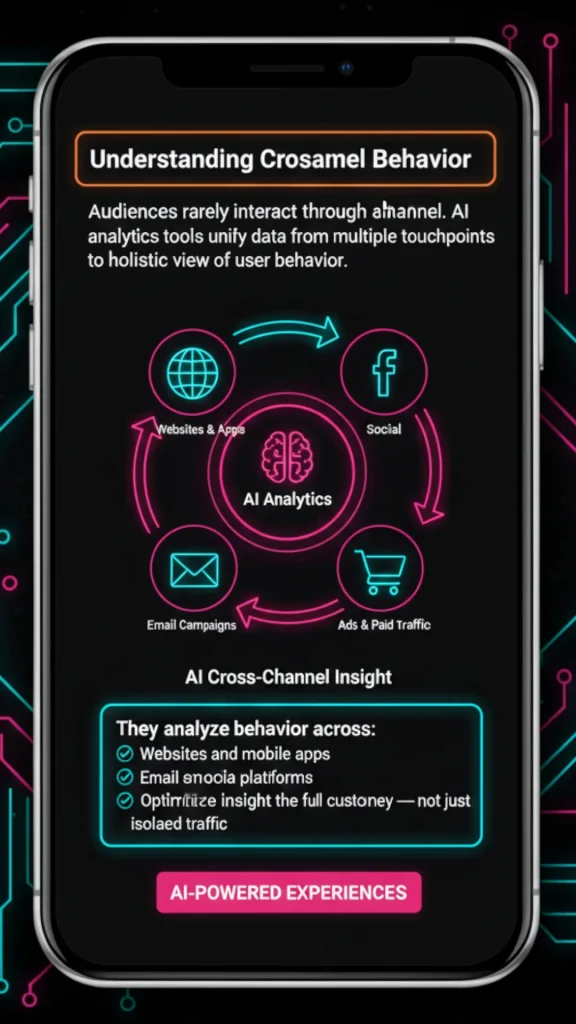
Audiences rarely interact through a single channel. AI analytics tools unify data from multiple touchpoints to create a holistic view of user behavior.
They analyze behavior across:
- Websites and mobile apps
- Social media platforms
- Email campaigns
- Ads and paid traffic
This cross-channel insight helps marketers understand the full customer journey not just isolated actions.
6. Real Time Insights & Alerts

AI analytics tools operate in real time, allowing businesses to respond immediately to behavior changes.
They can:
- Detect sudden drops in engagement
- Identify trending content or spikes in interest
- Trigger alerts for anomalies
- Adjust recommendations automatically
Real time insights help teams act faster and stay competitive.
7. Improving Content and Marketing Performance

By understanding what content resonates with audiences, AI analytics tools guide content and marketing strategies.
AI helps identify:
- Top-performing content formats
- Engagement driving topics
- Content gaps and opportunities
- Underperforming assets
This ensures resources are focused on strategies that deliver measurable results.
8. Reducing Guesswork With Data Driven Decisions

Instead of relying on assumptions, AI analytics empowers teams with evidence backed insights.
Benefits include:
- Better campaign planning
- Smarter budget allocation
- Improved UX decisions
- Stronger ROI measurement
AI removes guesswork and replaces it with actionable intelligence.
Popular Use Cases for AI Analytics Tools
AI analytics tools are widely used in:
- Digital marketing and SEO
- E-commerce optimization
- SaaS user behavior analysis
- Media and content platforms
- Customer experience management
They scale effortlessly, making them valuable for both small businesses and enterprises.
Best Practices for Using AI Analytics Effectively
To get the most from AI analytics:
- Ensure data quality and consistency
- Define clear goals and KPIs
- Combine AI insights with human judgment
- Act on insights, not just dashboards
- Continuously review and optimize strategies
AI analytics works best when insights are applied consistently.
Final Thoughts
AI analytics tools are redefining how businesses understand their audiences. By analyzing behavior patterns, predicting actions and delivering real time insights, AI helps organizations connect with users more meaningfully and effectively.
By learning how AI analytics tools help you understand audience behavior, businesses can create better experiences, improve performance and make smarter decisions all powered by data, not assumptions.